
The Numpties Guide To Fishing Baits – Fishing Bait Guide

In this guide we sift through the ancient newspaper packets in the bottom of our seatboxes, and thoughtfully sniff them in the hope that they contain something that doesn’t smell like infected socks.

Lugworm
Lugworm are generally known as the killer Cod bait, and are highly prized UK sea fishing bait especially during the winter months.
Due to the demands of the modern angler, Lugworm have kindly evolved into a new subspecies known as the ‘Frozen Black’. Little is known about the breeding habits of Frozen Black Lug and attempts to get them to breed in the freezer are rarely successful. One of the distinguishing features of this variety is that when cornered they immediately go stiff and stop moving in an effort to appear less threatening.
Lugworm consist of 49% Sand, 49% Water, 1% skin and 1% smell. Fresh lugworm are difficult to present well on the hook as the minute they are pierced they emit a fine jet of water into ones eye. Sometimes it can take as many as half a dozen fresh lug on a hook to start making any headway in terms of bulk, and often the soggy results simply fly off during the cast.
It is possible to dig your own Lugworm, on a sandy beach at low tide it is possible to spot the Lugworms ‘cast’ and ‘blowhole’. These are usually about a foot apart and you will need to dig parallel to an imaginary line between cast and blowhole down to a depth of about 18 inches. Make note that lugworm can travel at speeds of up to 40MPH under mud so great speed is required with the fork. The best method of improving digging technique is to listen to the ‘Benny Hill’ music on your iPod whilst digging – this will keep you mindful of the required pace.


Ragworm
The king of baits – ragworm is undoubtedly the most popular shore fishing bait in the UK. It has the ability to induce bites when lesser baits are ignored, and is favoured by most UK sea fish. Ragworm the king of UK sea fishing baits…
A Ragworm is basically a malleable tube filled with battery acid that has an insanely sharp pair of finger nippers where its tongue should be and in excess of 100 stumpy legs. If you recorded a home video of a bucket of Ragworm and played it back at teatime, it would have the kids hiding behind the sofa quicker than an episode of Dr.Who.
Ragworm isn’t the most expensive bait in the tackle shop, less than Peeler Crab or Frozen Black Lug, more than Mackerel and Squid. Value for money is generally good as long as the tackle dealer isn’t selling by weight and giving you Mamba sized specimens – it’s easy in this instance to find yourself inadvertently paying for a single 3 foot long Anaconda of a bait. Money can be saved by digging Ragworm yourself, all you need is a garden fork, a bucket, a low tide and a beach that is a mixture of fine shingle and sand.
With a 6 inch worm you can attract practically any UK sea fish, or the entire cast of Riverdance.

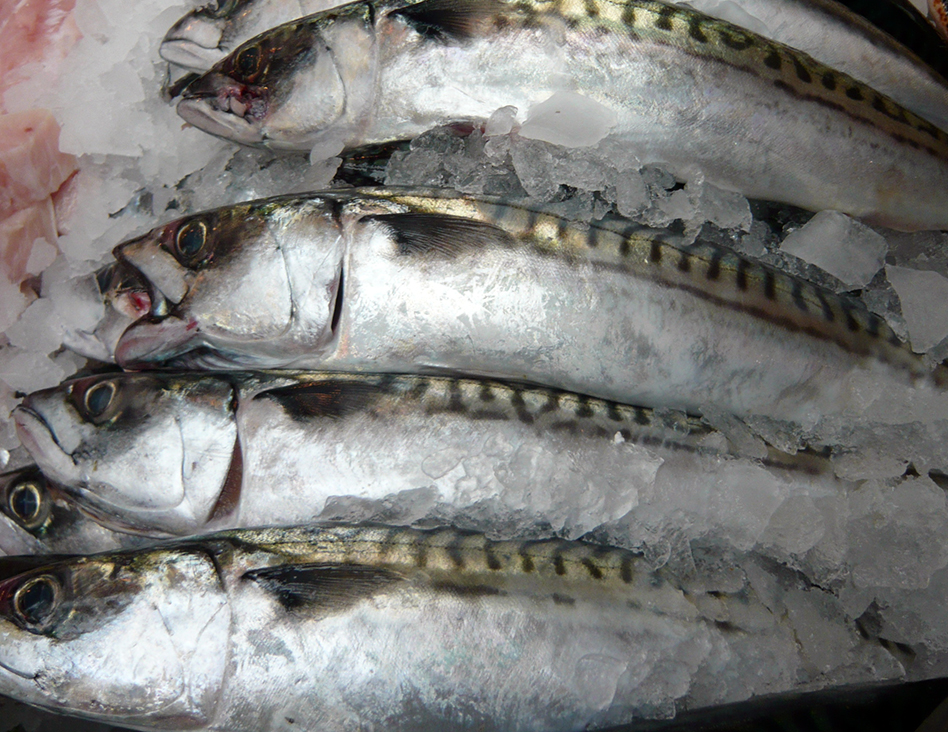
Mackerel
Mackerel is one of the few baits that can also be eaten by humans – unless your name is Hugh Fearnely-Zinc-Trumpet in which case you’re not averse to chomping the occasional Sandeel.
Mackerel isn’t as universally accepted as baits like Ragworm by UK sea fishes, with some species such as Flatfish and Wrasse completely refusing to eat it at all. Most other varieties will go for it though, especially Whiting, Bass, Garfish, Labradors and other Mackerel.
Fresh Mackerel is definitely better than frozen, so if you’re heading off for that monster Bass mission, go and bag yourself a brace of fresh Mackerel before you start. Please note that although it is possible to catch Mackerel simply by holding an open carrier bag next to the sea in the height of summer, any attempt to plan catching them will fail. You will need to pretend that you are in fact NOT going fishing later, and that you DO NOT want to catch any Mackerel. This should trick them into leaping into your arms.


Peeler Crab
Regarded by some as the premium UK sea fishing bait, and by others as overpriced eight-legged gits. Whatever your stance (as long as it’s not the ‘I’m a teapot’ one) Peeler Crabs play an important role in modern sea fishing.
A Peeler Crab is normal crab that has been in the sea so long that it has gone soft. As such it is very easy to dismantle and place on a hook. Since the Peeled Crab is quite soft, it is necessary to fasten it to the hook using bait elastic to prevent it evaporating during the cast.
Many UK sea fishes are alleged to eat Peelers, especially Smooth Hounds, Bass and Wrasse.


Sandeels
Since the 1950’s British holiday seaside gift shops have sold this bait to generations of optimistic hand-line anglers in vacuum sealed packets – the Sandeels being in sealed packets not the holiday makers. It is not believed that any of them ever caught anything more than sunburn.
Sandeels are also available in ‘live’ format which are very popular with boat anglers. They can also be purchased frozen from tackle shops and are a useful addition to the shore anglers bait pantry, being quite useful for catching Dogfish – but that’s a bit like saying fresh cream cakes are a good way of attracting wasps to your barbeque.
Though Sandeels aren’t that highly regarded on the UK mainland, they are extremely effective in the Channel Islands and can be used to catch most species there. The reason that they work so well when fishing in the Channel Islands is that the French fish have probably eaten everything else.


Squid
Squid is a bit like Marmite – it tastes great on toast after 14 pints of ‘Ace’. It is also the sort of bait that either catches everything or nothing – more often the latter.
There are two ways to use squid, either as a standalone bait or as a tipping bait when used with more upmarket baits.
In standalone form you simply thread a whole squid on a 6/0. Using this method you will generally blank, as a squid that has been caught, frozen, thawed, impaled and delivered aerially at 90MPH is not the most appetising dish you can present to a fish. That said, if you do catch using this method you will either land something worth catching or a Dogfish. Species that are known to appreciate whole squid baits are Bass, Black Bream and the Spanish.
The tipping bait method doesn’t involve popping a couple of baby squid into your chauffeur’s top pocket for getting you to the beach on time. Rather a tipping bait is the technique of loading your hook with a proper bait such as frozen black lugworm, and then adding a small amount of an underprivileged bait to act as garnish. Worm tipped with squid is a great bait on which to catch Cod and Whiting. It’s also a great way of preventing your upper class bait from exploding during the power stroke of the cast as the squid tipping will prevent it falling off the hook.
In our recent shore fishing bait poll squid received 9% of the vote, a whole 2% ahead of Scampi Fries.


Shrimps
In addition to being a truly universal bait for saltwater fishing, shrimp is considered to be one of the best too. It works for catching most of the popular species of fish from grouper and flounder to redfish and jackfish. You will have the highest chances of catching fish with shrimps when you use them for pier and surf fishing. This is a true treat for the species which come close to shore to feed.
Should you use frozen or fresh shrimp? Both will work well, but the latter option is certainly better. In any case, you must use ice to keep the bait in perfect condition before you start fishing with it. Remember that fish are attracted primarily by the natural smell of shrimps. It’s crucial to hook the shrimp through the head. Do it gently to prevent the body from falling off the hook.

Mussel
This is an excellent choice of bait. All mussels found in the particular sea area will attract local fish that feed on it. While it might be tempting to buy your fishing bait from the local market, it’s better to catch it yourself. Gather mussels from the shallow waters near the place where you will fish.
To prepare the bait, you need to cut crack the shell open and cut the mussel out. Keep the remaining mussels in a container or bucket with cold seawater. If you don’t have an aerator, change the water frequently to keep the bait fresh.
One of the most important things for using a mussel as fishing bait is not to place it on the hook directly. Leave it under exposed to the sun and the wind for a little while so that it hardens. This will help to ensure that it actually stays on the hook.

Maggots
This is perhaps the most widely used type of bait for freshwater fishing. Maggots are actually the larvae of the blue bottle fly. There are white, bronze and red ones, so it pays off to find out exactly what works best for the species of fish that you want to catch. You can buy maggots or raise them at home.
One important thing to remember is that the larvae are best suited for fishing three to five days after hatching. This is when they reach their maximum size and are the most attractive to fish. You should keep them cool and use them within the next four or five days. After this, maggots will get dry and become more or less useless.
You can hook one, two or more maggots to attract fish. You can also scatter a few on the surface of the water. They will start floating naturally and attract fish.

Bread
This type of bait has been used for hundreds of years and it works exceptionally for freshwater fish, from carp to trout. The easiest way to use bread is to prepare balls.
To make a ball, take a small amount of bread, add a drop of water and form a ball using your fingers. The size of the ball must correspond to the size of the species of fish which you are trying to catch. For even better results, you can also add flavoring. Garlic, anise and licorice are great options.
The alternatives to bread balls include bread punch, flake and crust. The latter option is ideal for catching fish that feed on the surface like carp.

Sweetcorn
This type of bait is cheap and easily accessible, but these aren’t its only advantages. It is a great addition to ground bait and to bits. When you use bits, you can readily add a piece of sweetcorn to attract bigger fish.
The quality of sweetcorn is essential for a good catch. A canned product is a fine choice as long as it doesn’t have artificial color or flavoring. Opt for sweetcorn from a brand which is known for its high quality. The bigger and sweeter the pieces are the better.
Will a flavored variety work well? Many anglers swear by using sweetcorn with curry for ice fishing. Indeed, the strong smell helps to attract fish. Of course, you should jig slowly to ensure that you will attract the attention of the slowly moving fish.

Baits from the Co-op
Sea fishing from the rocks… You’ve just finished work and it’s a beautiful summers evening. You decide to grab some bait on the way home so you can go up the rocks for a quick dangle, but the tackle shops are all closed and your only option is to raid the fish chiller at the local Co-op.
Your only hope is that they have some plain fresh Mackerel in the fridge because that’s about all that’s going to work. Smoked Mackerel with one side covered in peppercorns may be highly tempting, but all it will do in the sea is create a small and highly localised oil slick.
Quite often the only suitable bait will be raw unseasoned fresh fish, this will more than likely be Trout or Salmon. Fresh Trout is an effective bait for catching Rockling, but it is advisable to consider the investment in finest Trout just to catch a worthless Rockling.
The temptation you will feel to give Crab Sticks a go is a bit like the temptation to stick your fingers in an exposed light bulb socket to see if it’s on. Best avoided.


Scrounged Baits
This category of baits includes all of the baits you may scrounge on the beach such as Cockles, Mussels, Limpets, Winkles and Sea Anemones.
To best gauge the effectiveness of this approach to fishing simply watch an episode of Reel Wars where Steve has elected to go for the tent and find his bait on the beach. The resulting 6 hours of him whining about how hungry he is will serve to illustrate how well scrounged bait works.